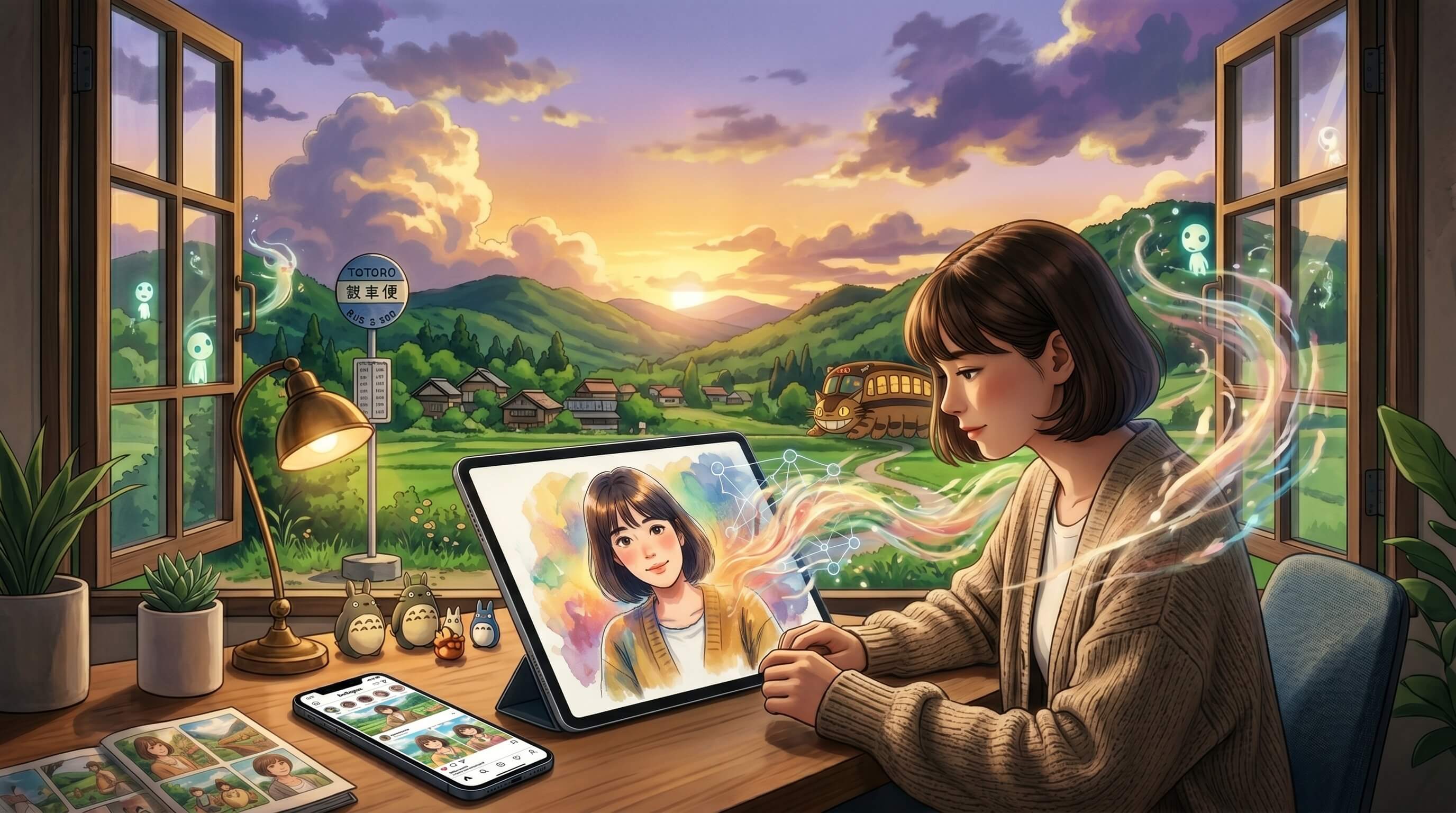
One plausible editorial interpretation is that the Ghibli AI trend grew because a recognizable visual language met accessible image editing and personal photos. The images are easy to understand at a glance, while the subject can be someone’s pet, room, trip, or portrait. That combination helps explain the trend’s appeal without proving that every viewer has the same motive or that one platform mechanism caused it.
A style people recognize quickly
Soft painted texture, natural light, expressive characters, and detailed environments can signal “Ghibli-inspired” at a glance. The Ghibli Museum’s background-art material explains how backgrounds create the world in which characters live and how hand work, paper, paint, water, light, and shadow shape that world. This gives the visual language more depth than a generic color filter.
Personal photos make the idea shareable
An image of a person, pet, room, or trip becomes a playful reinterpretation of something familiar. The subject supplies a personal story; the visual treatment supplies a recognizable frame. A before-and-after format is easy to parse in a feed, even when viewers know the result is an AI-generated interpretation. This is an observation about the format, not a measured explanation of distribution.
Current image tools also reduce the technical setup needed for a first attempt. The OpenAI Images help page documents creating an image from instructions and editing an uploaded image. Product availability and controls change, so this is a workflow example rather than a claim that every tool behaves the same way.
The label compresses many choices
“Ghibli style” is a short label for a bundle of choices: subject, environment, light, palette, line, texture, and mood. It is convenient, but it can flatten differences among films, artists, and anime traditions. A more useful prompt names the choices directly, such as “a rainy village road, layered painted background, soft overcast light, restrained greens, and a quiet observational mood.”
What the trend does not establish
A viral-looking image does not prove a user count, a mental-health effect, a copyright result, a financial impact on Studio Ghibli, or the quality of a specific generator. Those questions require separate evidence: a defined sample, an applicable study, a current legal source, or a documented product comparison. This article explains plausible visual and workflow factors; it does not measure the global size of the trend.
How to participate thoughtfully
Use your own photos or images you have permission to edit. Remove private information before uploading. Describe visual traits rather than asking for an official character or frame, and inspect the output for altered faces, text, logos, and unwanted objects. If you share it, label it as AI-generated or AI-edited when that context matters.
FAQ
What is the Ghibli AI trend?
It is a broad online practice of using image generators or editors to create personal images with visual traits associated with Studio Ghibli films.
Why is it easy to recognize?
The images often combine familiar personal subjects with painted environments, natural light, and expressive 2D character treatment.
Does the trend prove that people want the same thing?
No. Visibility and sharing can show interest, but they do not establish one motive, audience, or psychological effect.