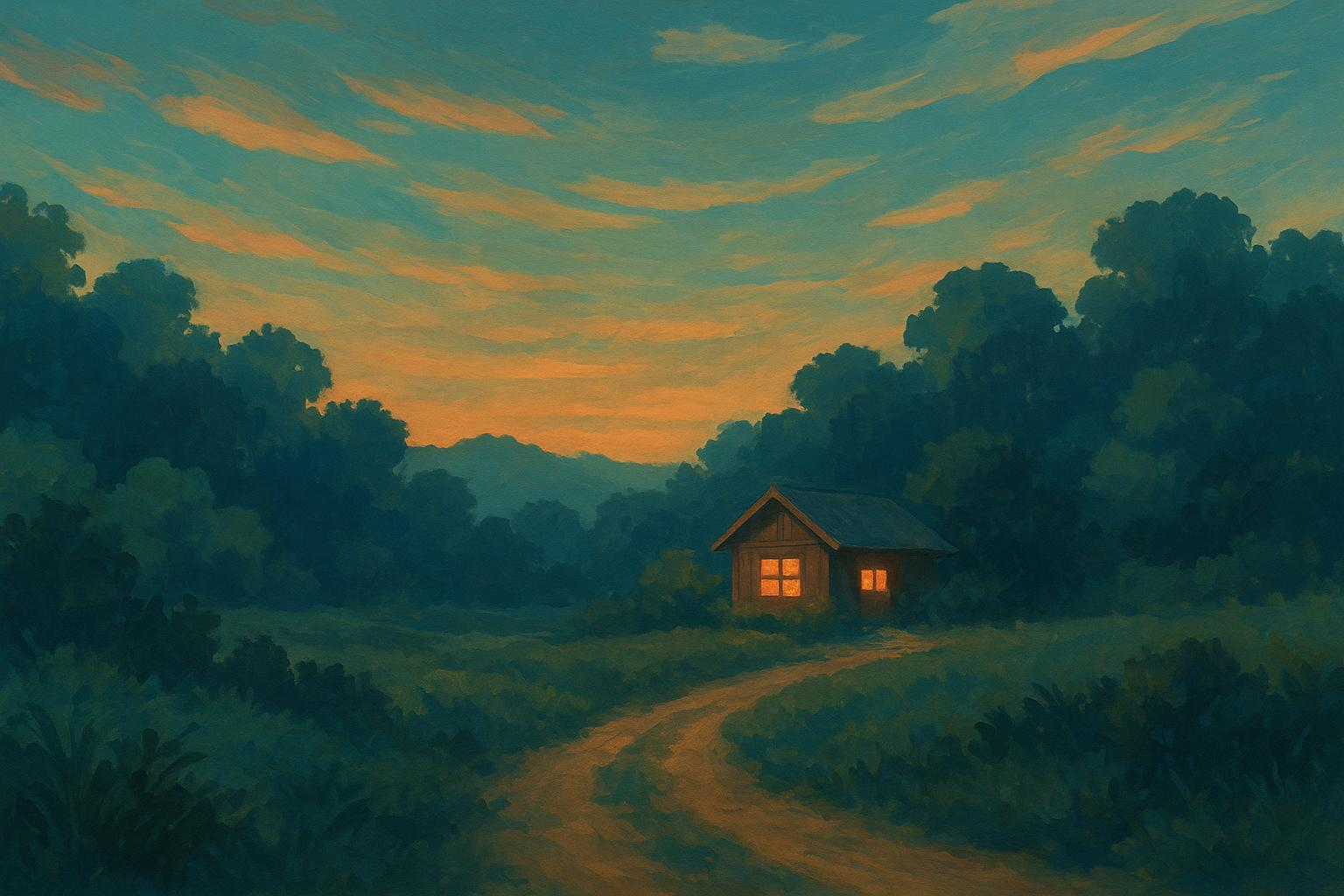
Ghibli art is the visual work made for Studio Ghibli’s films and related projects, plus the informal internet shorthand for some of the traits viewers associate with those works. It is not a single official filter or a checklist that every frame follows. The clearest definition is a combination of hand-drawn animation, carefully observed environments, expressive but readable characters, and storytelling that gives atmosphere and ordinary moments room to matter.
Studio Ghibli was founded in Japan in 1985 by Hayao Miyazaki, Isao Takahata, and producer Toshio Suzuki. The studio’s films differ from one another. A useful description therefore talks about recurring choices and production values rather than claiming that every film uses the same palette, line, or character design.
The recognizable characteristics
Environments carry meaning
Ghibli scenes often make the setting feel inhabited. A road, kitchen, forest, train, or weather front can establish mood and reveal how characters live. The Ghibli Museum describes background art as the material that creates the world in which characters live. It also describes the interaction of paper, paint, water, and hand work in background production. That first-party account supports a craft-based reading of the images: the setting is part of the visual storytelling.
Natural observation and stylization coexist
The art may begin with observed trees, buildings, clothing, food, or light, then shape those observations for animation. “Naturalistic” does not mean photorealistic. Proportions, colors, and motion remain designed. A familiar place can be simplified, heightened, or made more atmospheric so that it communicates feeling quickly.
Color is organized around mood
Many Ghibli images use restrained natural colors, soft transitions, and carefully placed accents. Other scenes are saturated or dramatic. The useful lesson is not “always use pastel watercolor.” It is to decide what light, weather, season, and emotional temperature the palette should convey.
Characters feel physically present
Characters are often defined by posture, timing, clothing, and small gestures as much as by facial features. Eating, running, waiting, cleaning, or looking around can communicate personality. This attention to physical action makes the fantastic feel connected to everyday life.
Quiet intervals are part of the rhythm
Ghibli films frequently pause for travel, work, landscape, or an unhurried exchange. These moments can give the audience time to notice a place and understand a character. They are a storytelling choice, not a rule that all Ghibli films are slow or free of action.
Ghibli art is still anime
Studio Ghibli films are anime, and anime includes many visual traditions. Comparing “Ghibli” with “anime” as two separate categories creates a false boundary. A better comparison asks which anime conventions a particular film emphasizes: background detail, line economy, graphic contrast, action design, realism, comedy, or quiet observation.
What people mean by “Ghibli style” online
Online, “Ghibli style” commonly means a generated or edited image with soft painted textures, warm natural light, rounded expressive figures, and a detailed environment. That shorthand can help someone describe a mood, but it does not reproduce a film’s direction, animation timing, sound, character writing, or artists’ process. It can also flatten differences between films and turn a studio’s body of work into a generic preset.
When requesting an image, describe the traits you actually want: subject, setting, season, light, palette, texture, line quality, and mood. “A rainy rural station, hand-drawn 2D animation, layered painted background, muted greens and warm window light” gives an image tool more useful information than a label alone.
How to look at a Ghibli image
Ask four questions:
- What does the environment tell me about the place or the character?
- Where does the light come from, and how does it change the color?
- Which small gesture or object makes the scene feel lived-in?
- Is the composition asking me to watch an action, or to stay with a mood?
These questions work for studying a film frame, describing an illustration, or evaluating an AI-generated image. They also keep the conversation specific instead of treating “Ghibli” as a promise of quality.
FAQ
Is Ghibli art the same as anime art?
Ghibli art is part of anime, but anime is much broader. Other anime works may use very different characters, colors, motion, and backgrounds.
Is there one official Ghibli art style?
There is no single public checklist that defines every work. The studio’s films and artists share recognizable tendencies while still differing in design and technique.
What makes Ghibli backgrounds special?
They often combine observation, material texture, lighting, and narrative attention. The Ghibli Museum’s background-art material is a useful first-party explanation of that role.
Can an AI image be authentic Ghibli art?
An AI image may imitate broad visual traits, but “authentic” also involves authorship, production context, and the specific film or artist being referenced. Describe the traits you want and avoid presenting a generated image as an original Studio Ghibli work.